WHY NOT JUST HAVE IT ALL?
UNSPECIFIED LOCATION
PROJECT TYPE: Open Design Competition (Microhome 2025), Individual Entry
PROGRAM: A 25 sqm self-sustaining, off-grid modular residence featuring flexible interior spatial configurations and designed for adaptability across a range of rural and urban contexts. Sponsored by Kingspan, the competition brief encouraged the integration of proprietary products including low-impact insulated metal panels and rainwater collection tanks into the home's design.
All too often, the concept of a “Microhome” is fetishized or dismissed as an exercise in ascetic extremism. In just how small of a space can a person live? How monastically can they divorce themselves from all possessions and comforts? Must living small come at the expense of living well? This proposal challenges such questions and posits that a thoughtfully articulated dwelling can live larger than the sum of its parts.
URBAN INFILL CONFIGURATION
STACKING / MODULARITY:
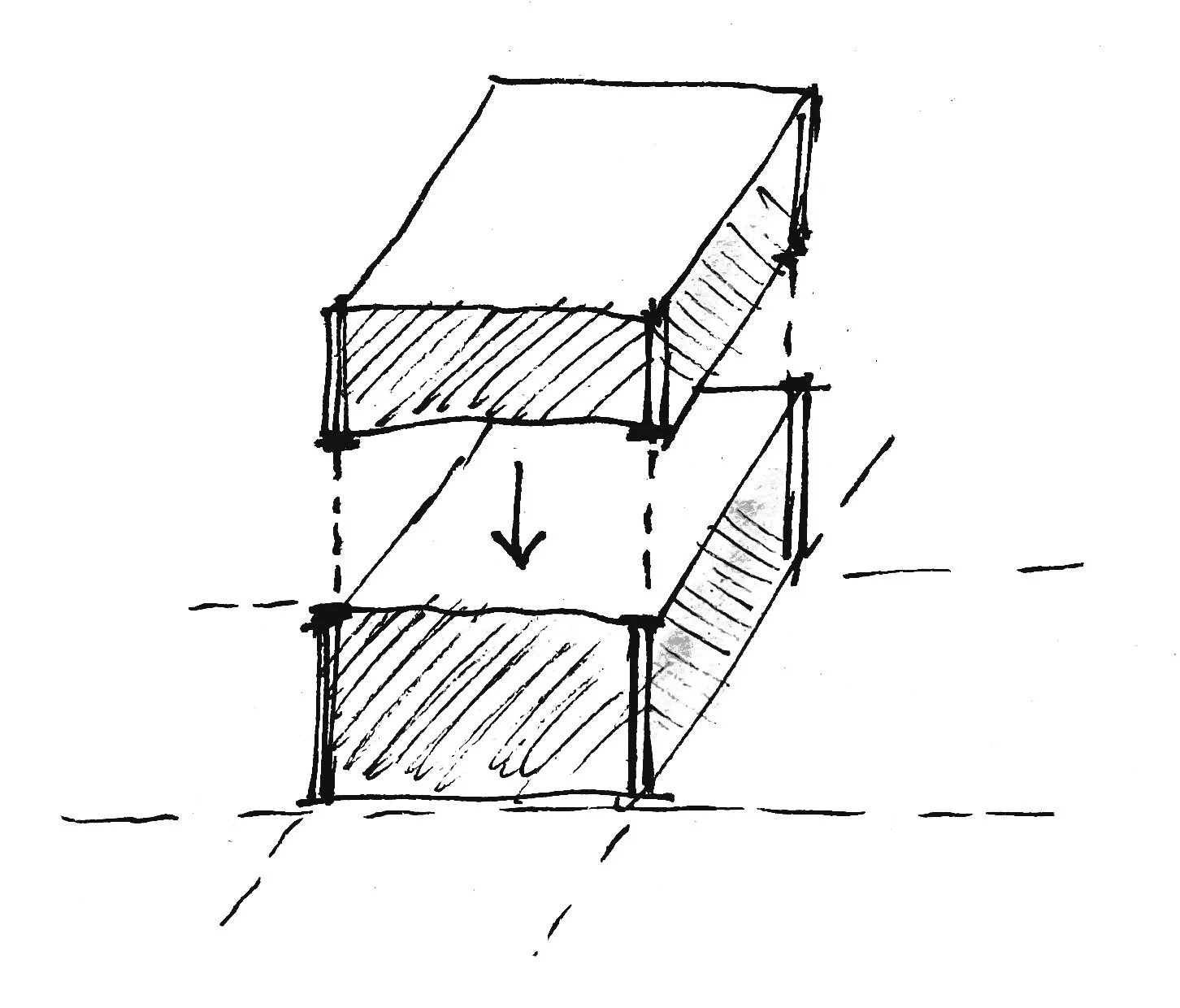
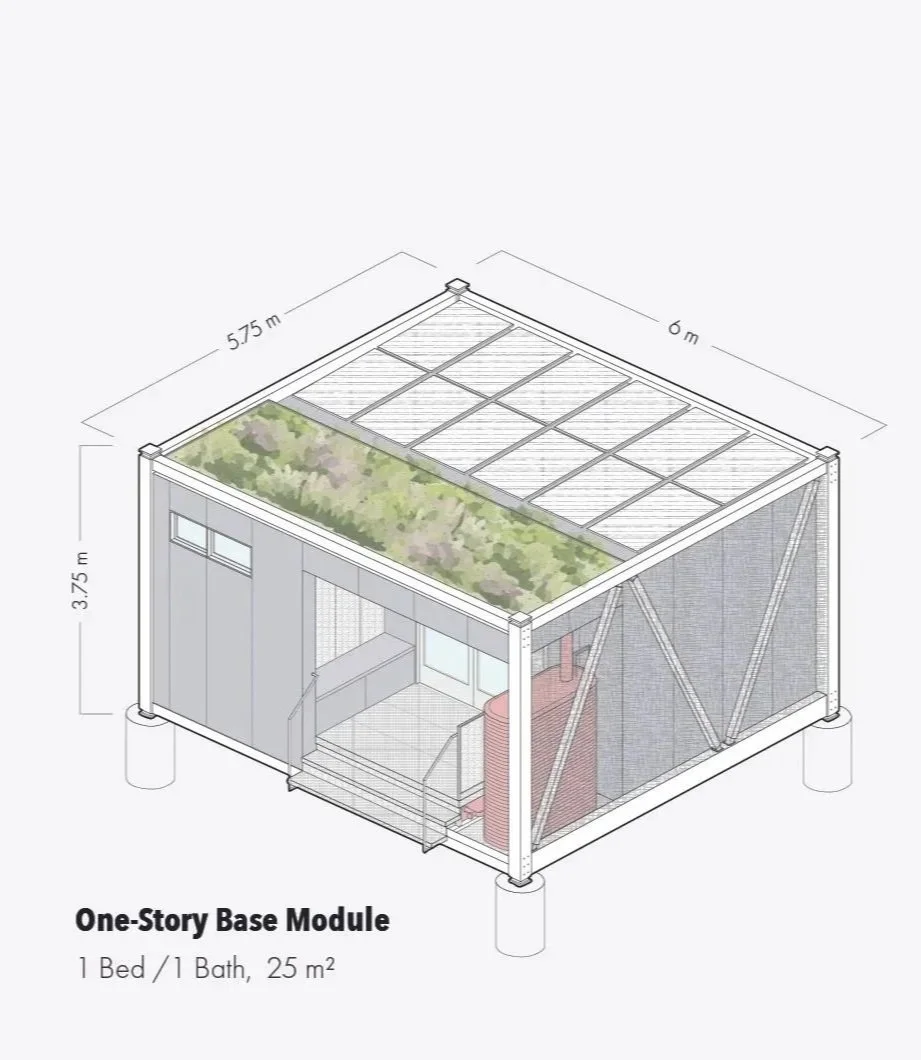
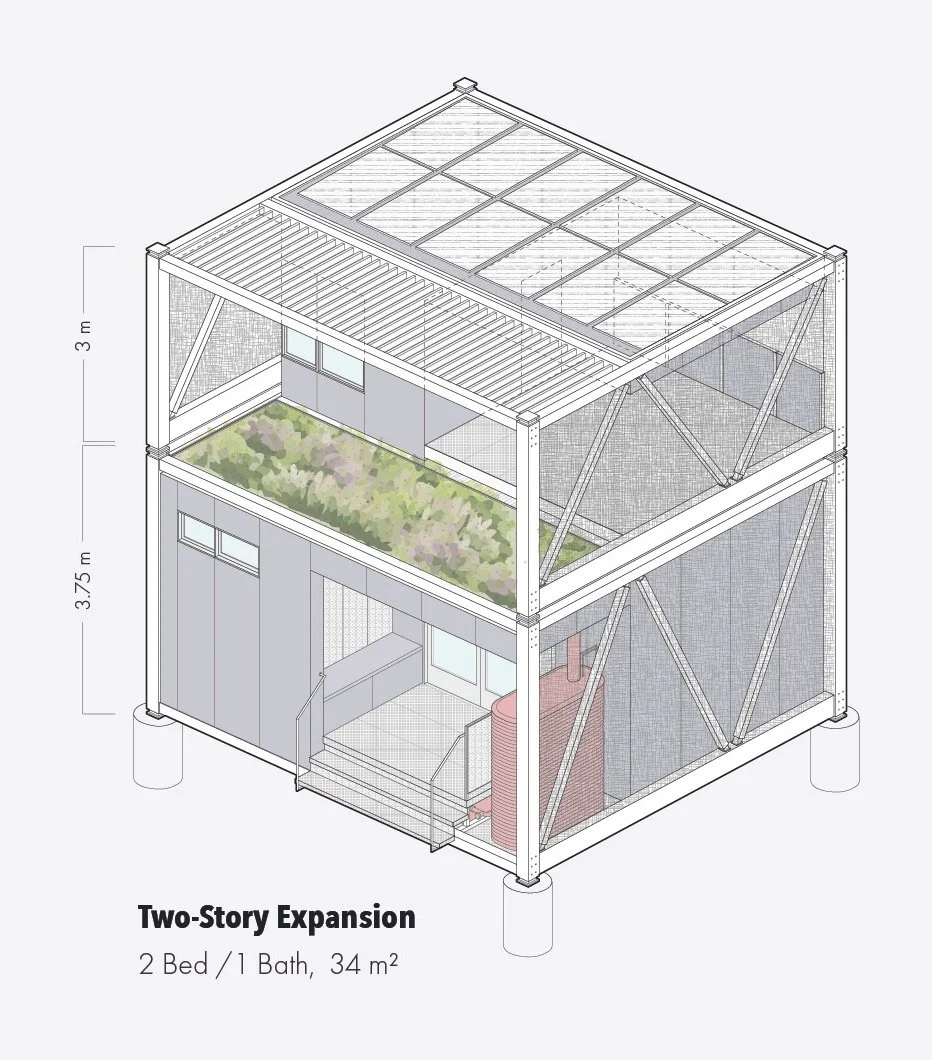
At its core, the proposal is based around a rectilinear, one-story, 25 square meter dwelling module. While firstly a self-sustaining, passively ventilated, off-grid cabin, it can also serve as a building block within a larger network of linked units. Perhaps the occupants would like to have a friend stay over for a weekend? Or the family may want to grow? With the addition of an 8 sqm sleeping loft and patio module, the home can scale from a space sized for 2, to a space for 3 or more. Together, the two modular units serve as a kit of parts that can be variably stacked and adapted to fit both rural and urban contexts: not only in single family dwelling form, but also in co-living and multi-family configurations. Furthermore, the stacking arrangement can be continuously altered, combined, and deconstructed as needed to meet changing occupant needs.
INTERIOR PERMUTABILITY:
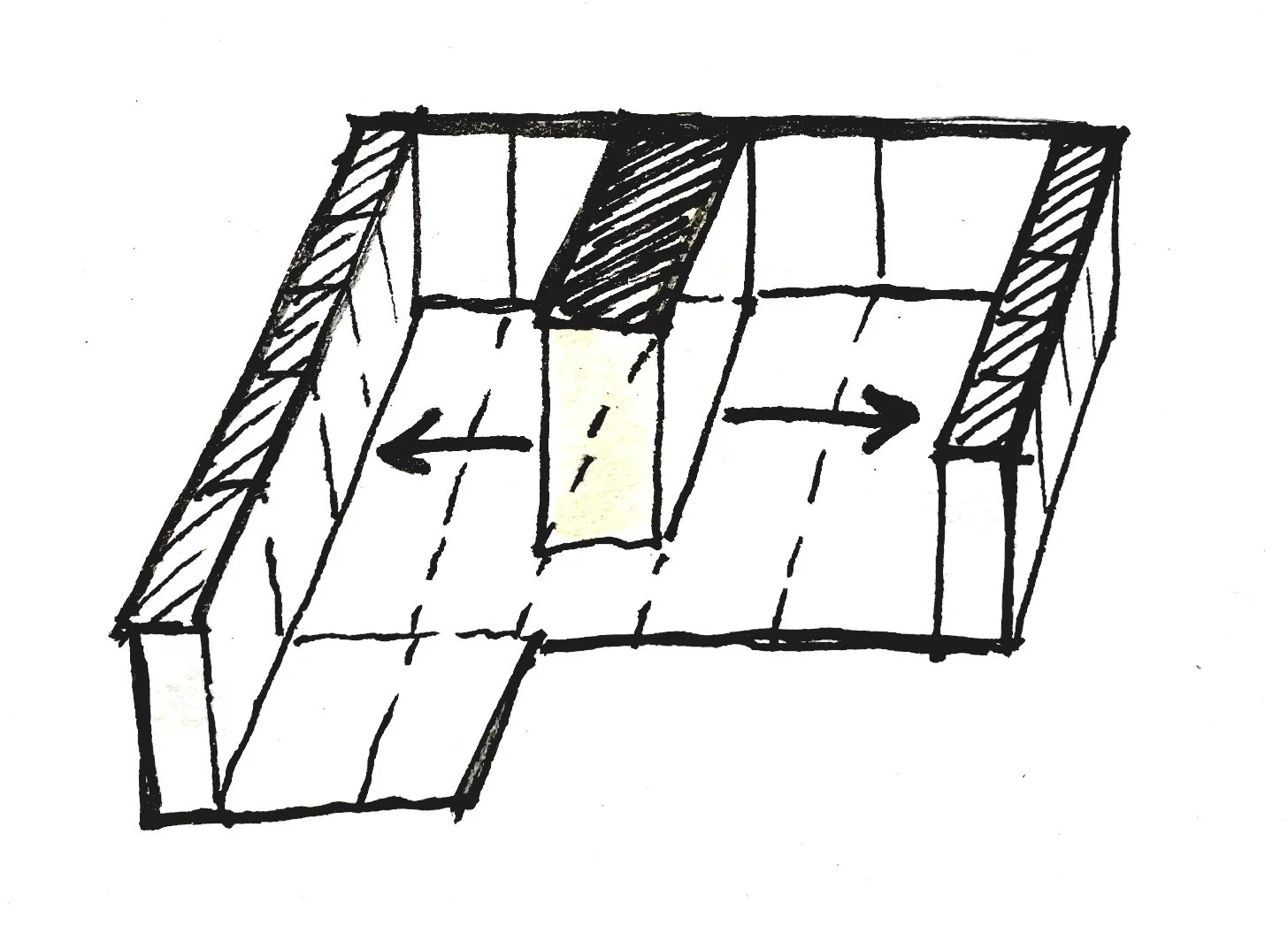
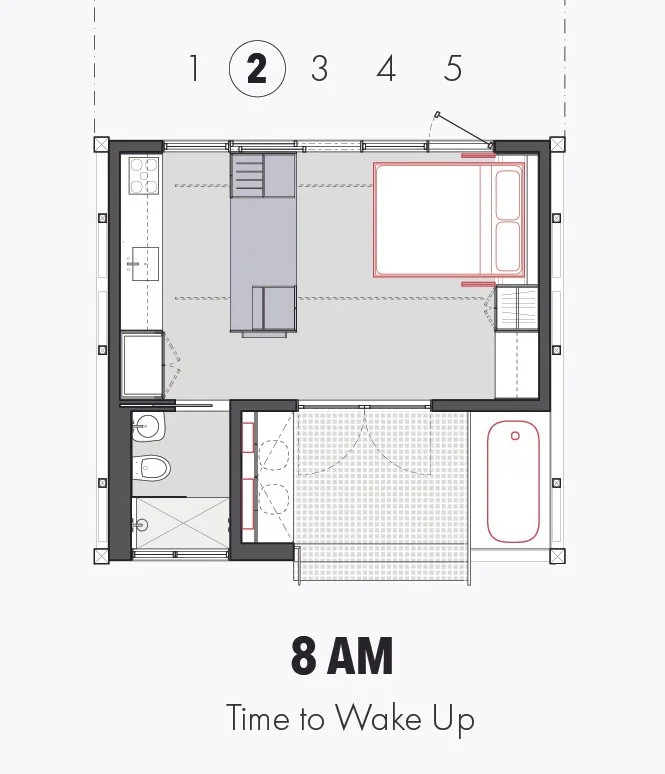
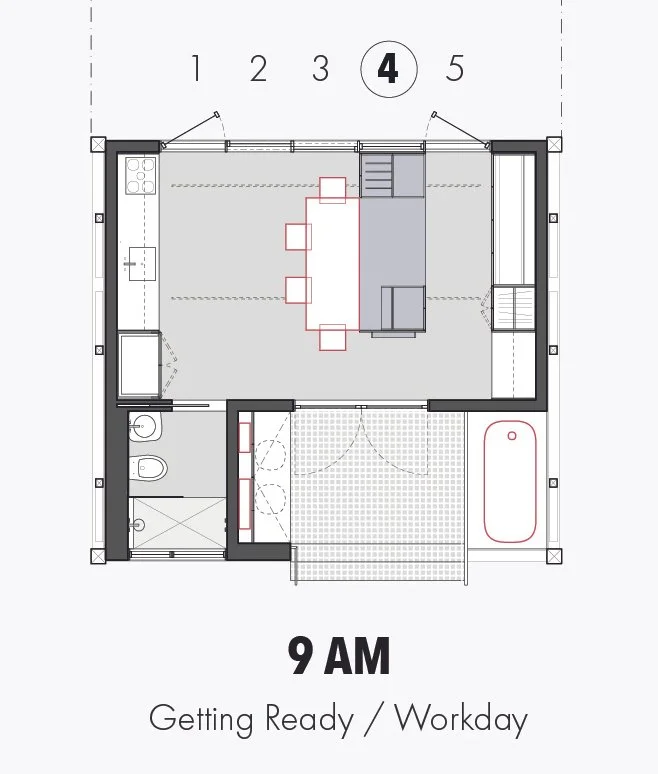
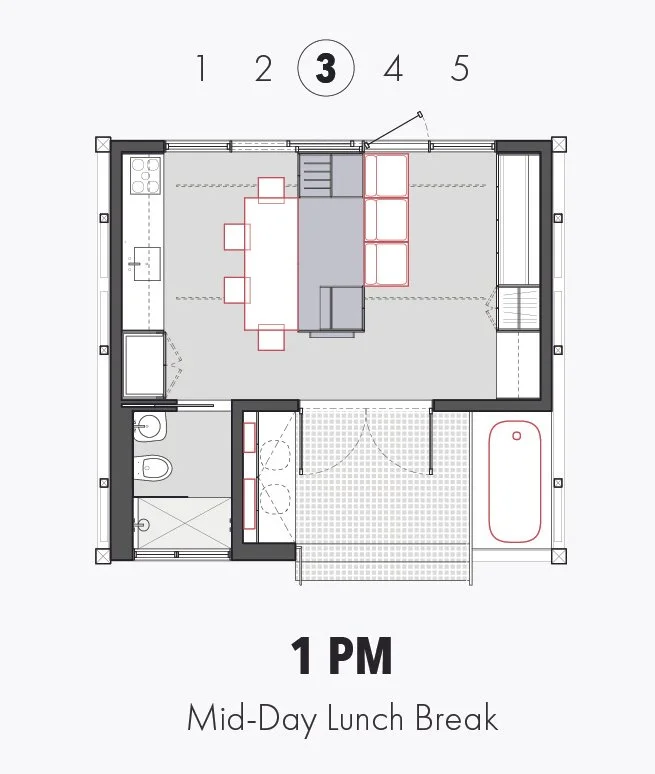
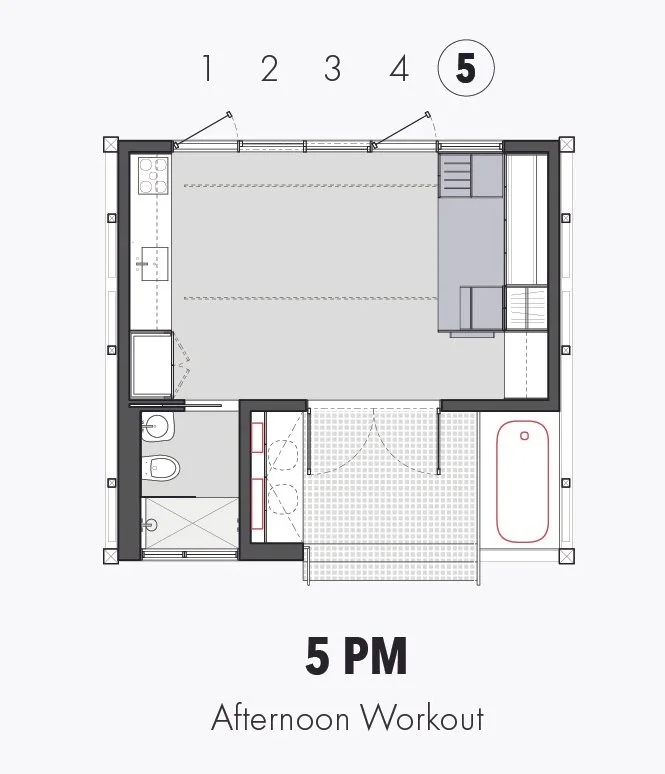
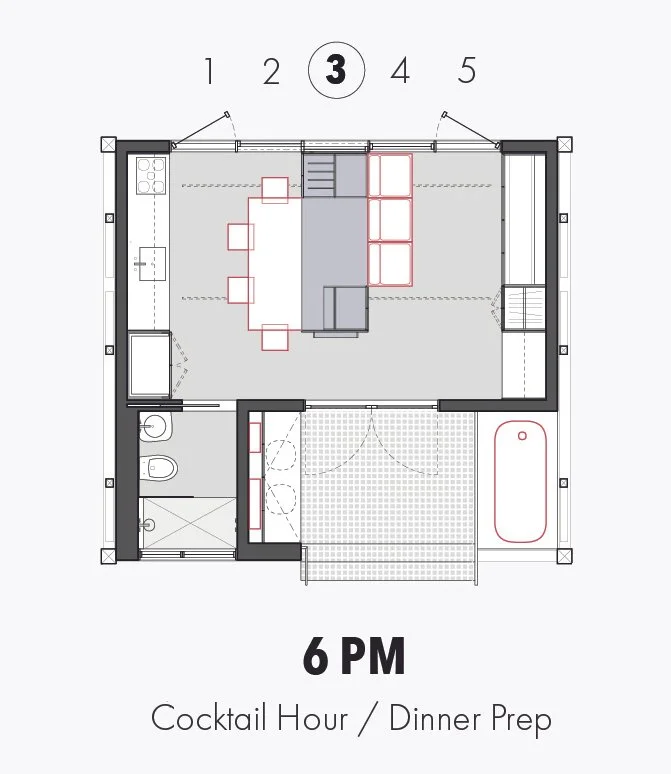
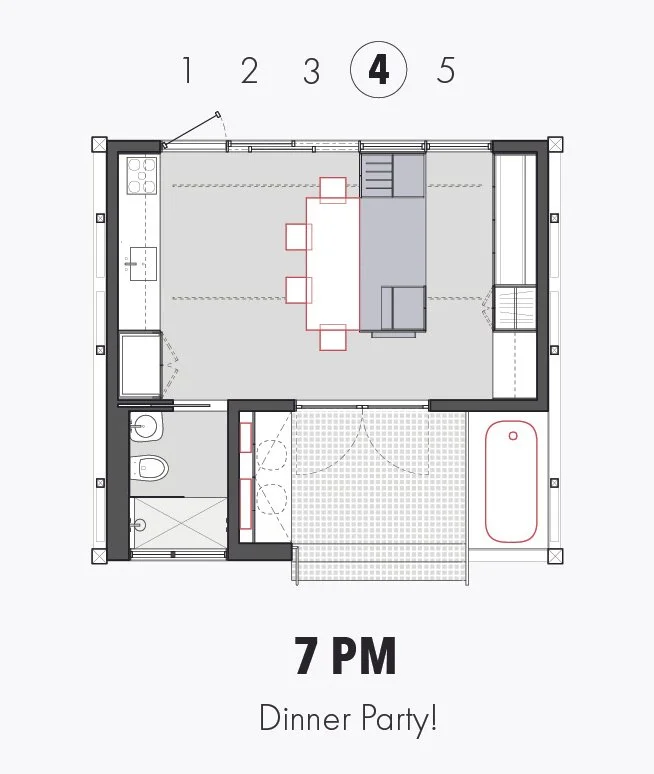
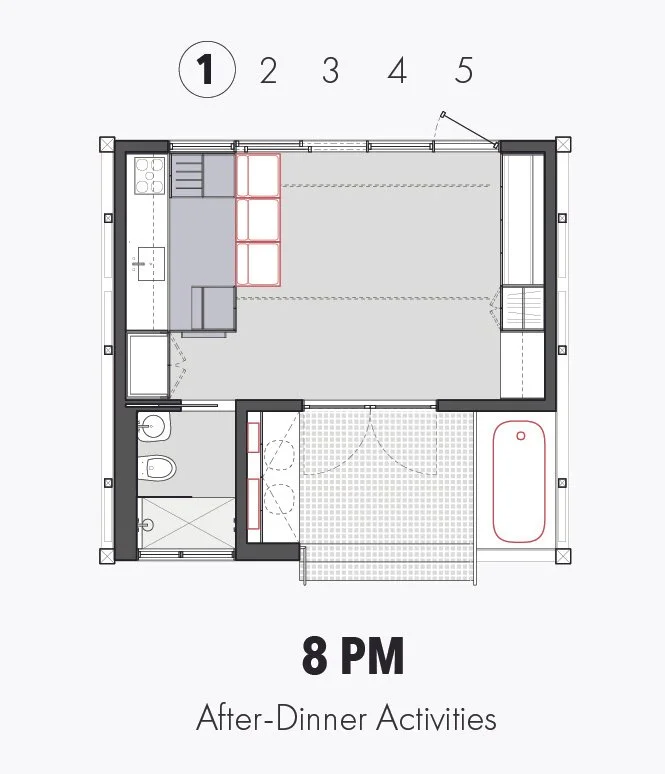
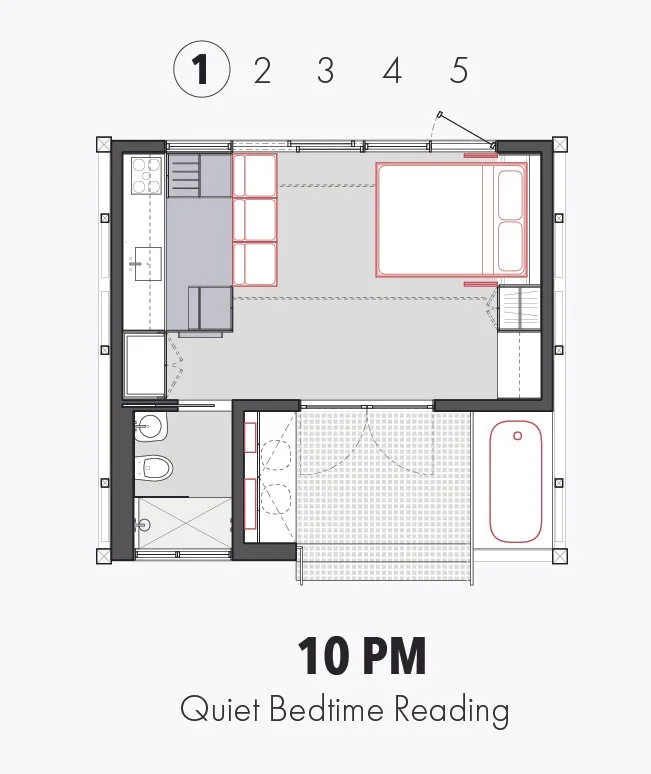
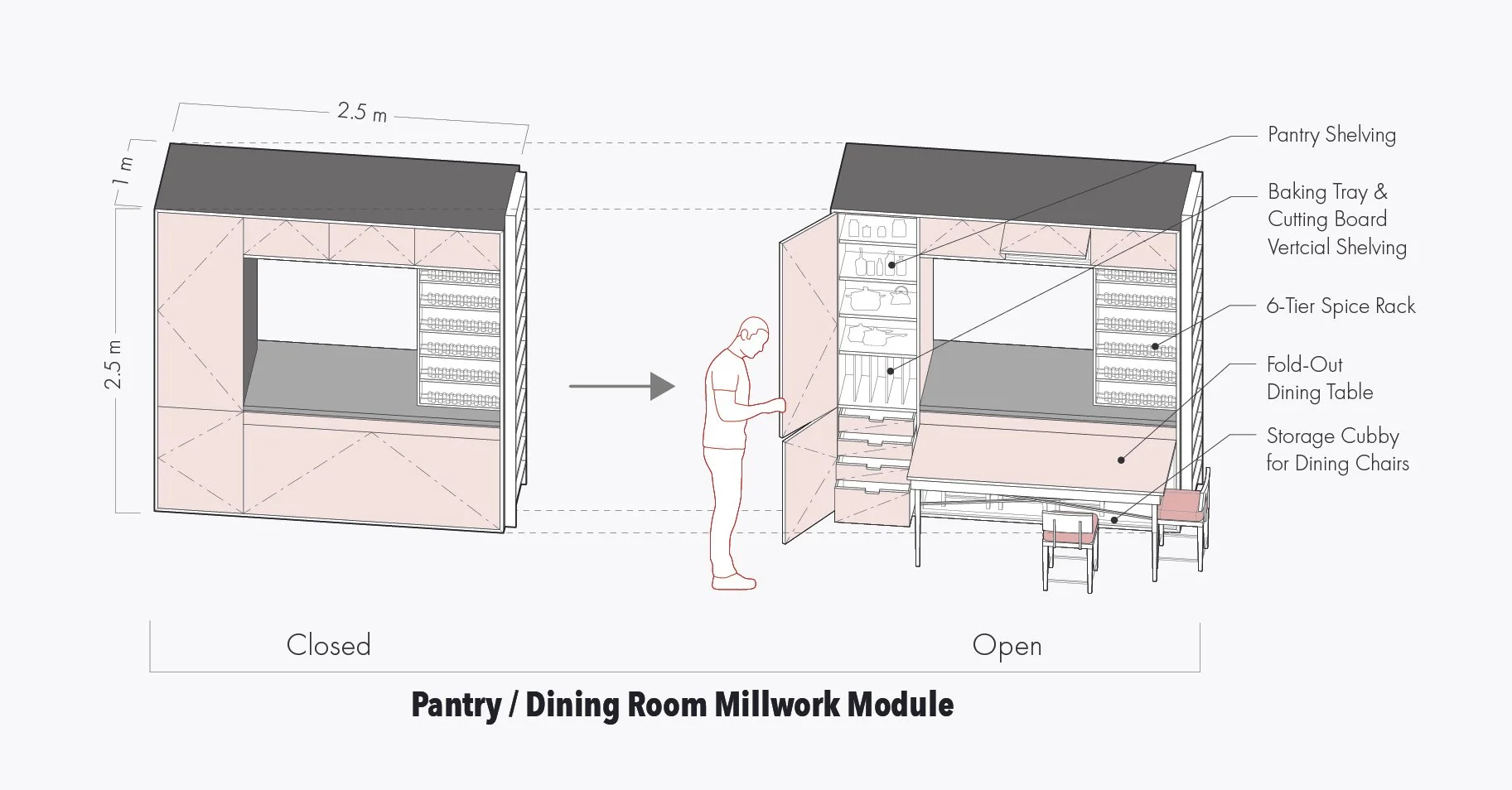
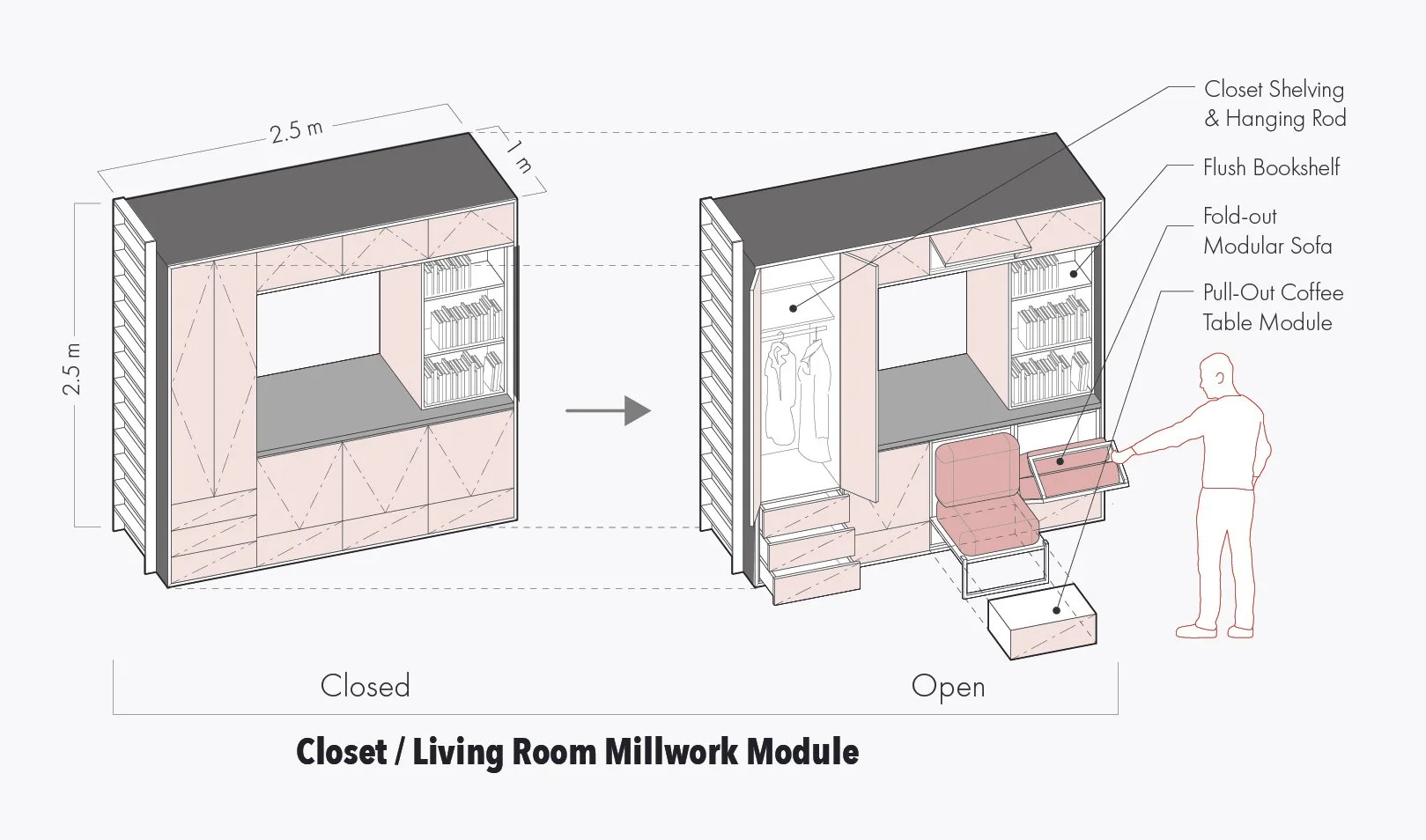
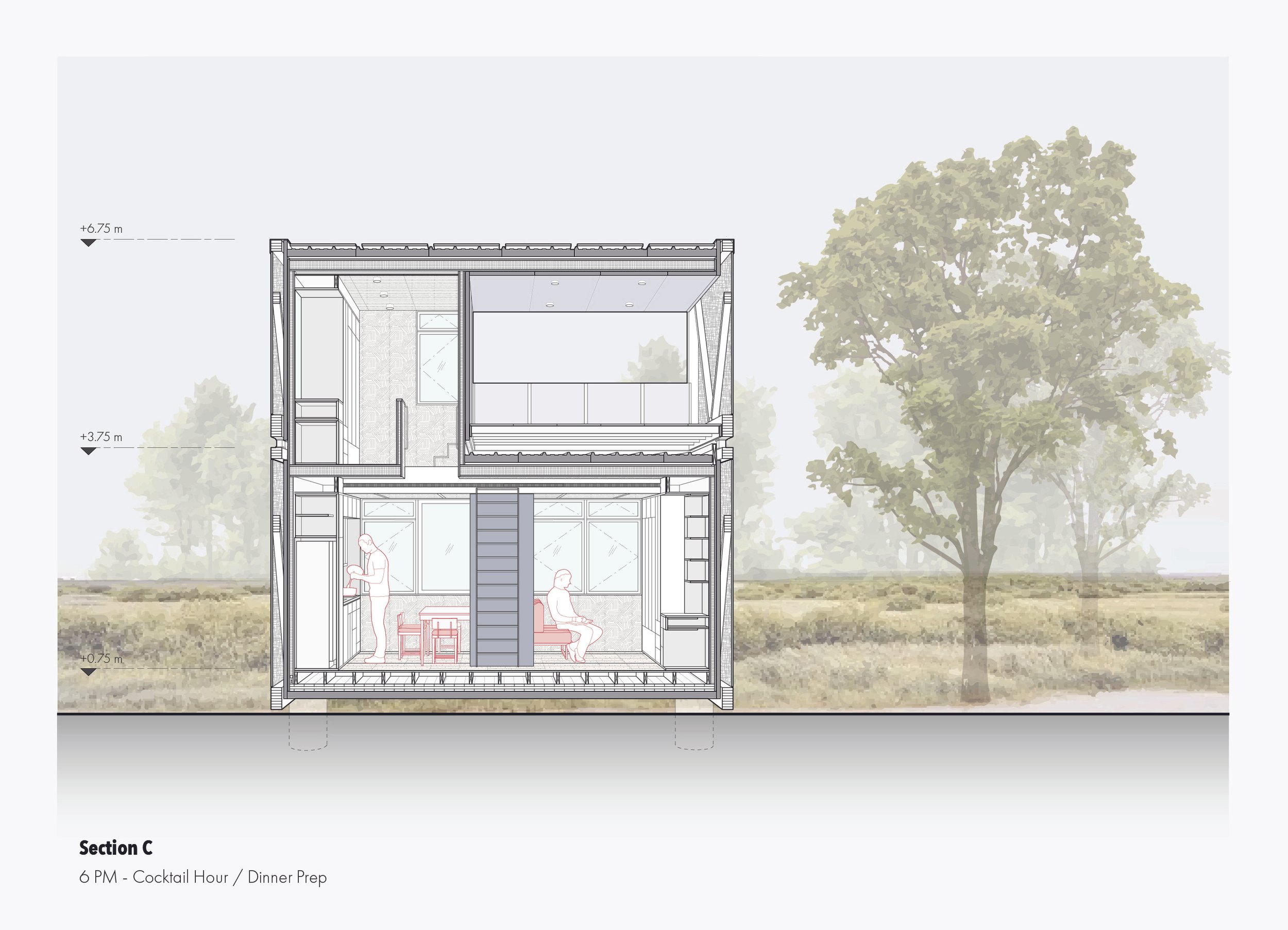
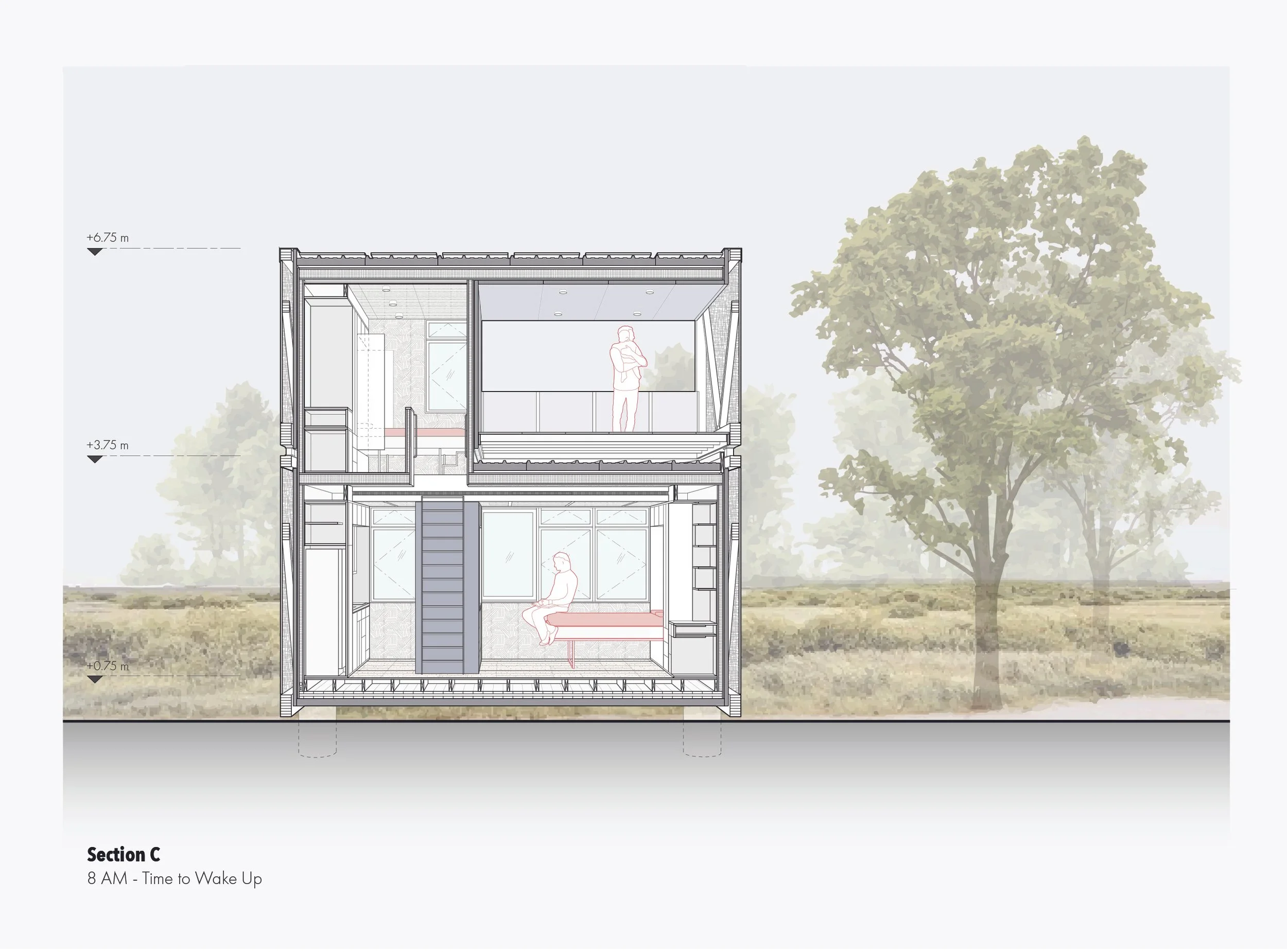
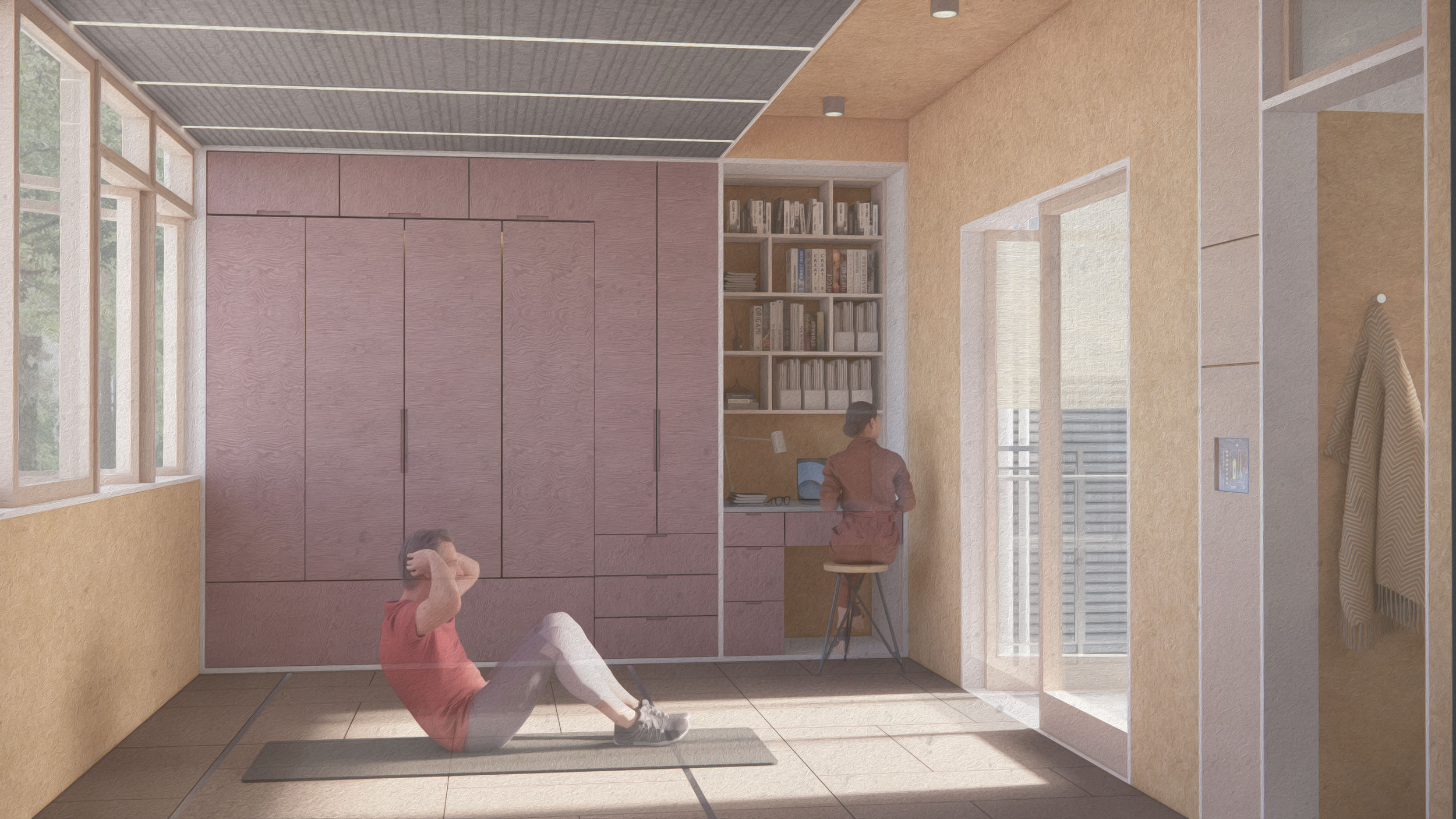
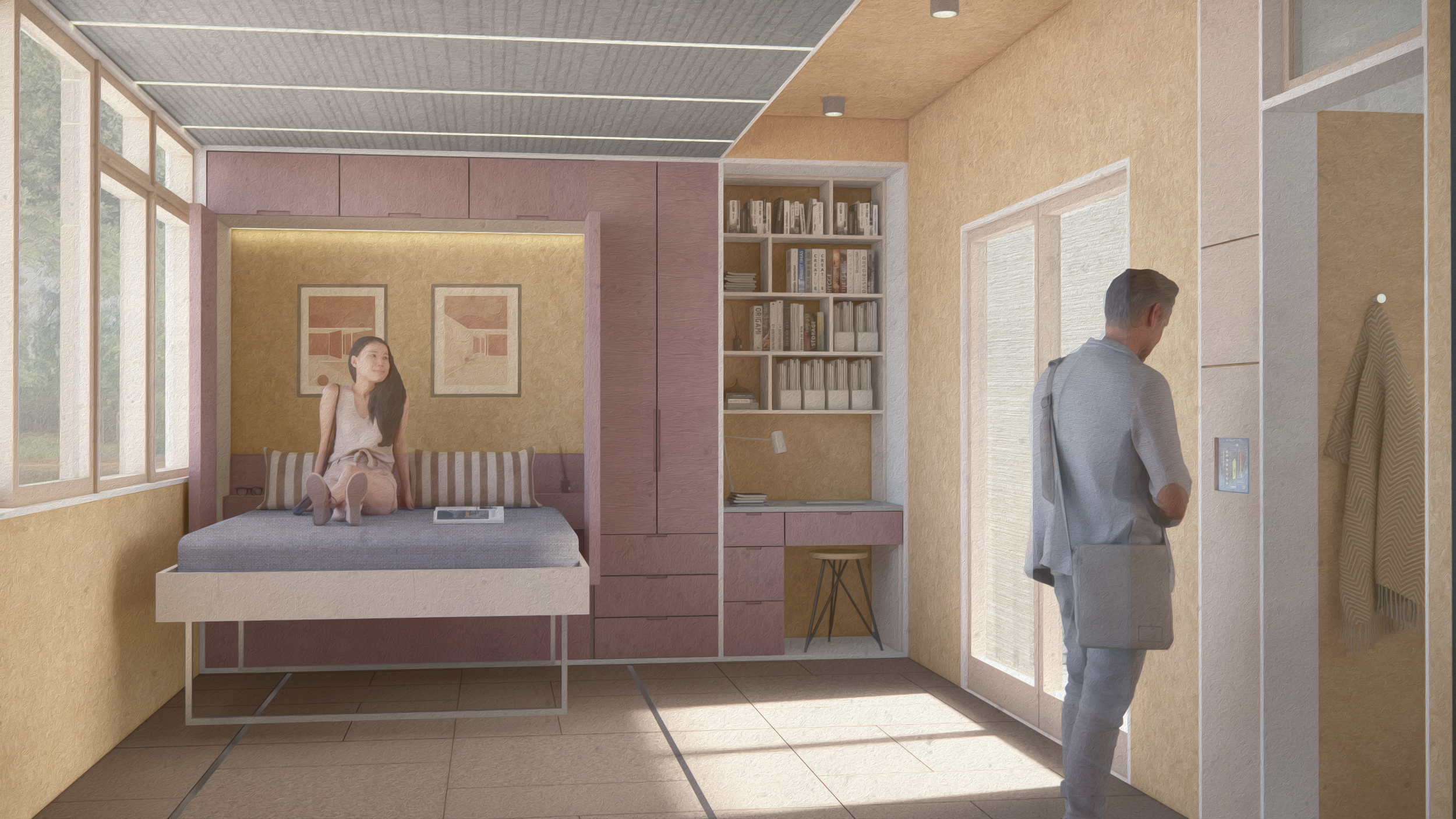
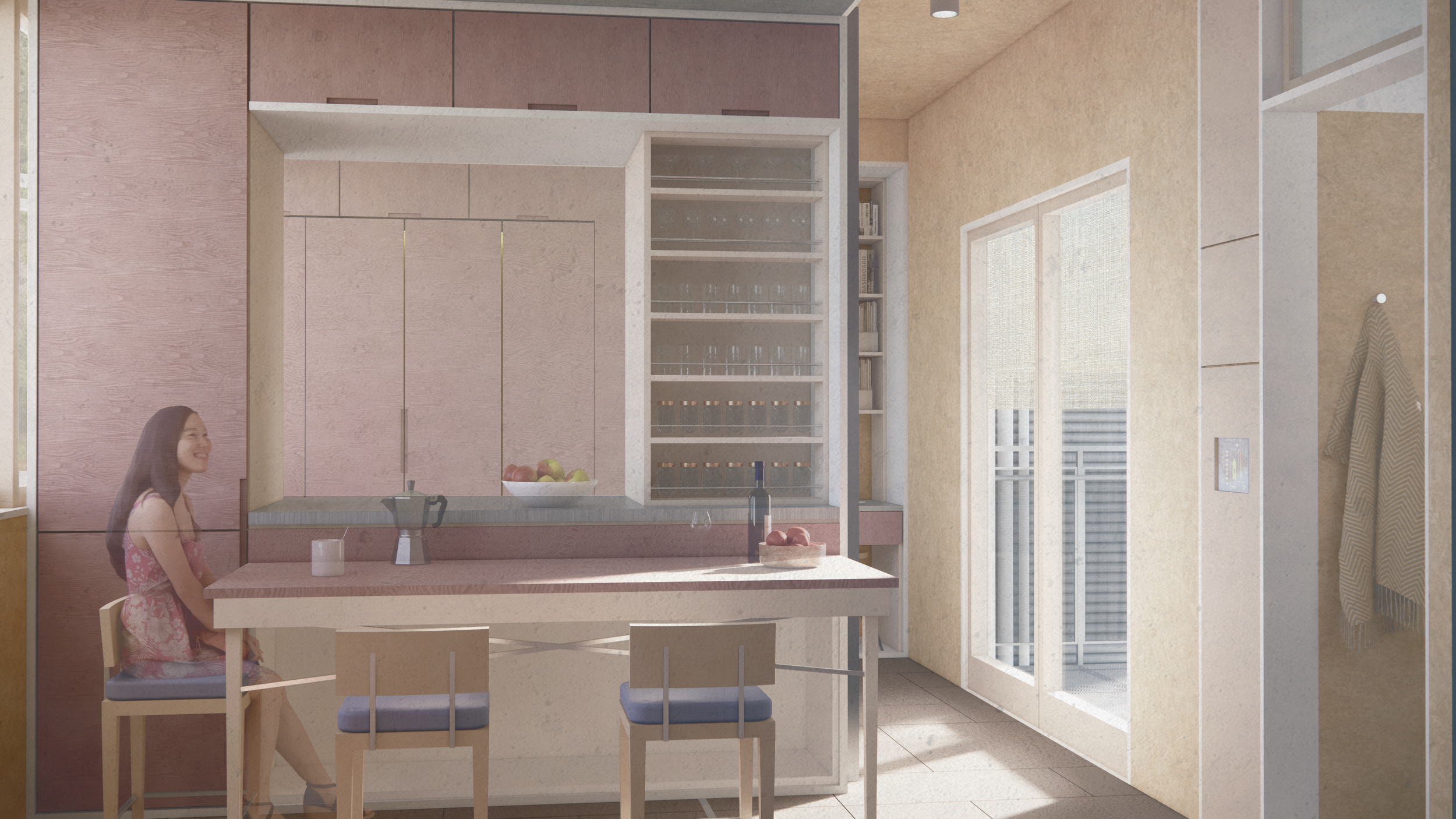
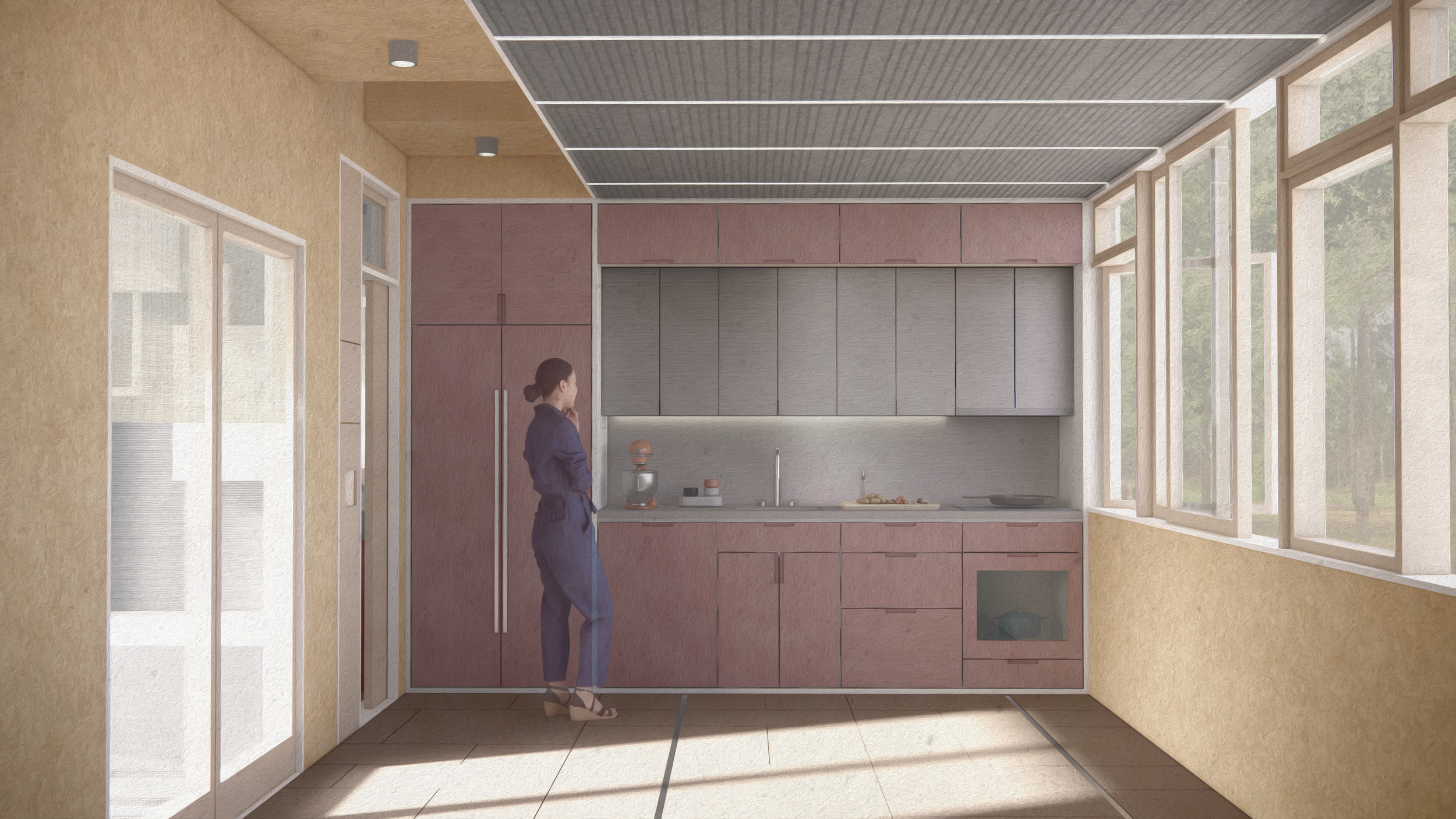
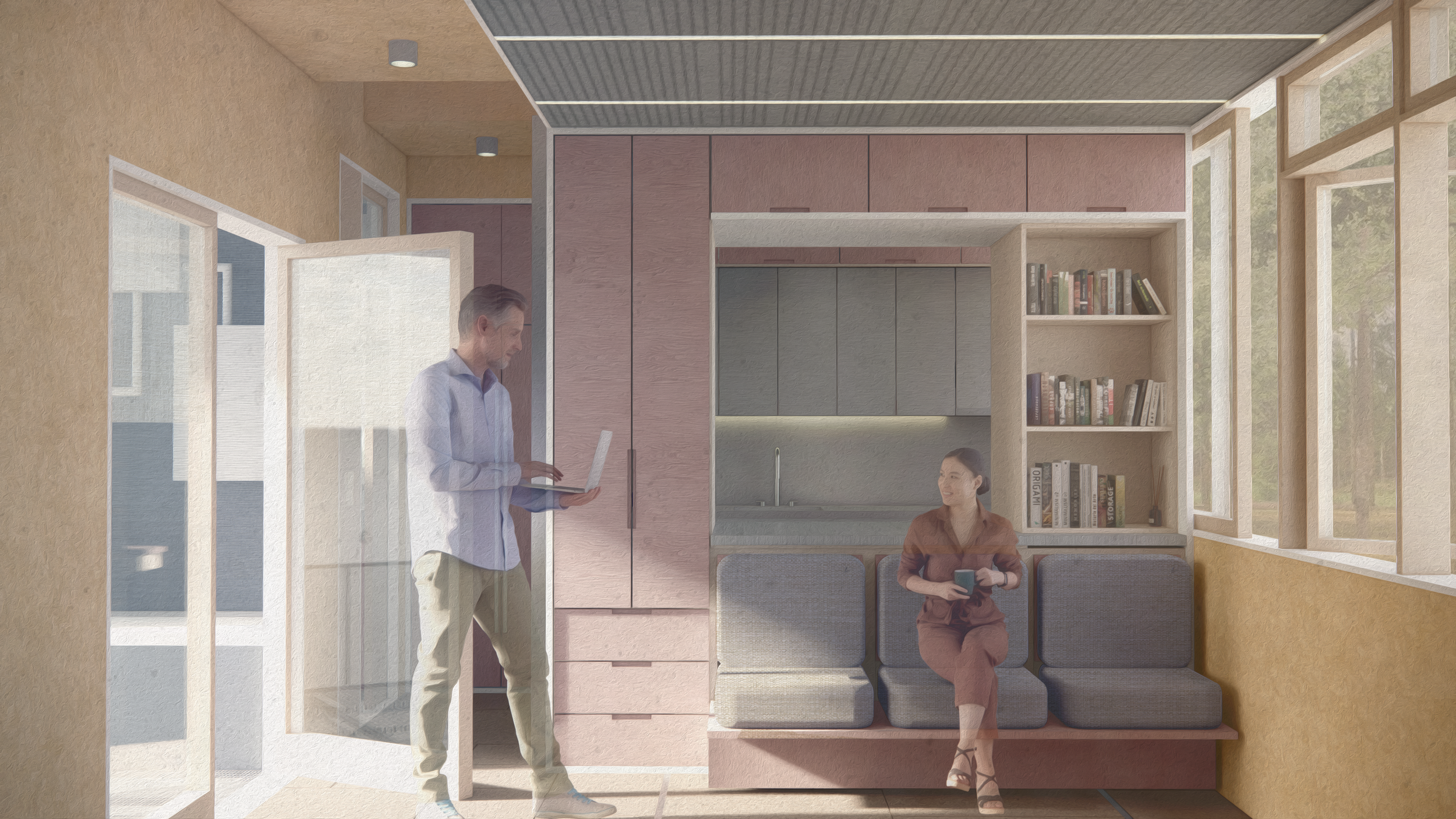
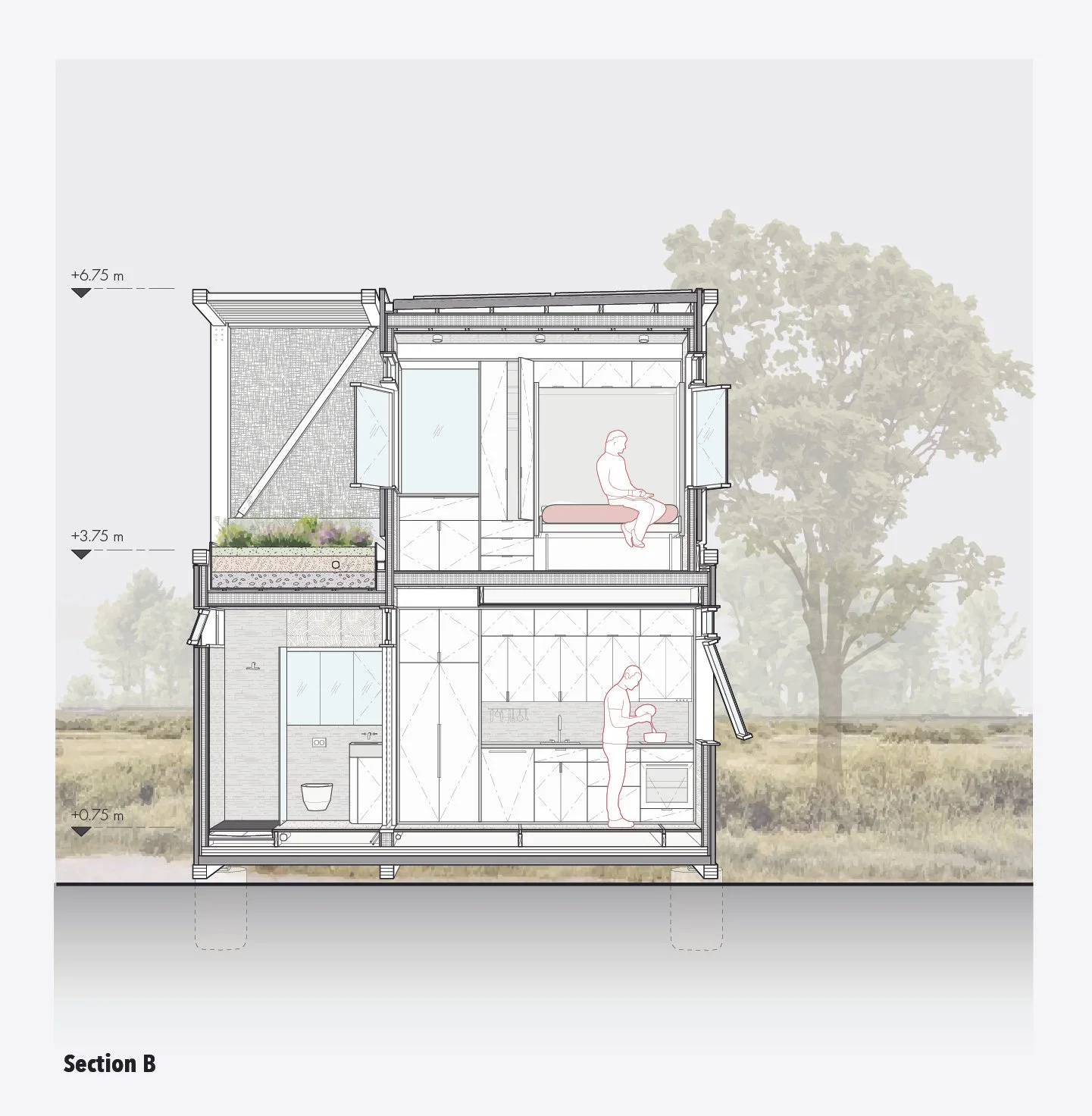
Flexibility and adaptability are also at the heart of the interior organizational strategy. While the underlying space is a simple box with fixed millwork at each end, a centrally located mobile millwork module breaks the box into a variety of programmatically driven scene sets. Based on high-density mobile shelving systems often used for library stacks, the mobile module contains everything from fold-down living and dining room furniture to kitchen pantry storage, hanging closet space, and a ladder to access the added loft module. With five set floorplan positions for the mobile unit, the “simple box” can be transformed into a wide range of room setups tailored to various activities, functions, and moods over the course of a single day.
STRUCTURE / ENVELOPE:
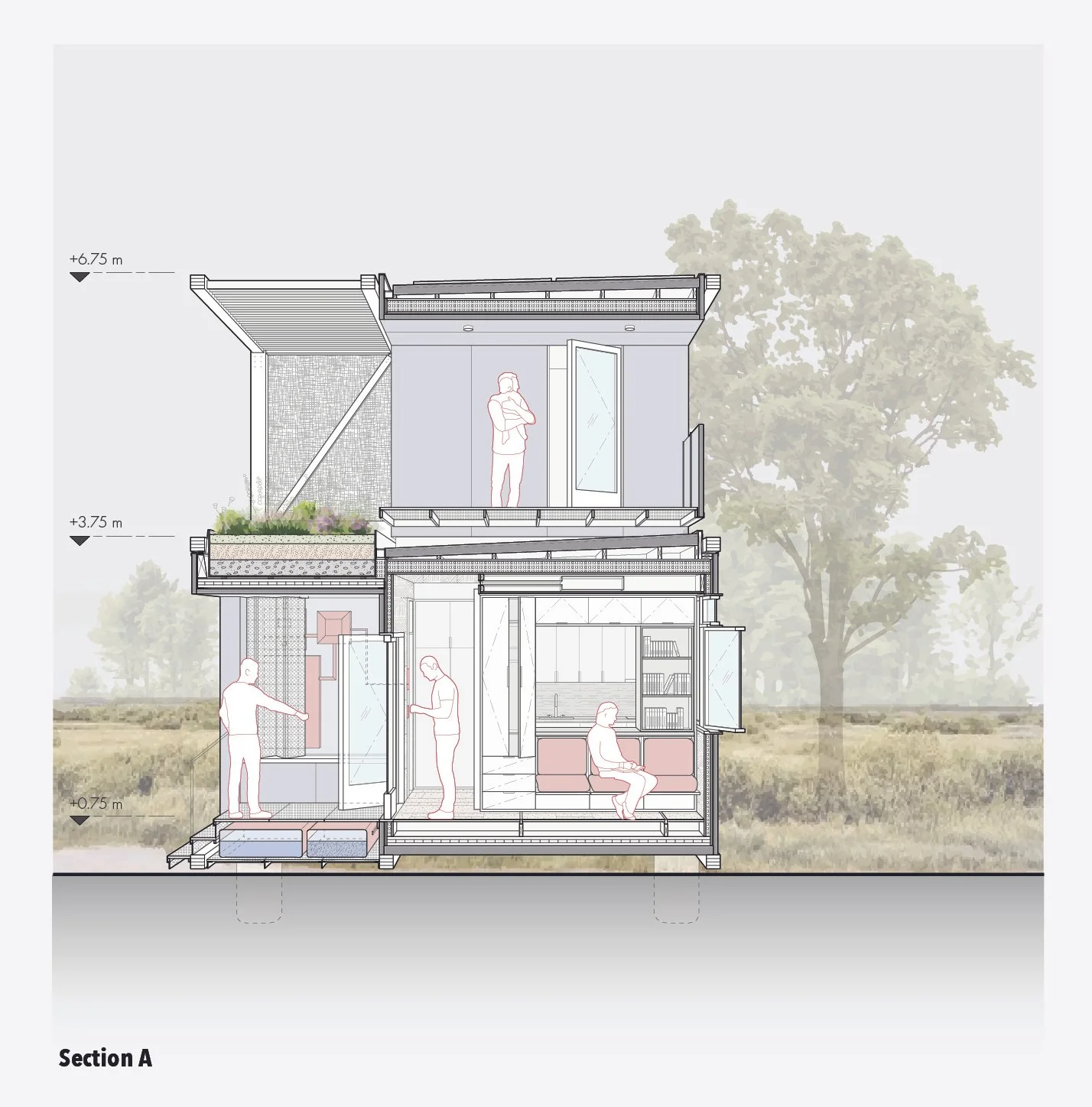
The exo-skeletal truss structure, designed out of shop-fabricated glue-laminated timber, allows for seamless vertical expandability from a single home module to a multi-family complex. The four corner posts allow stacked gravity loads to pass straight to the foundation without impacting individual modules, while the diagonal braces provide added shear and lateral support. Cross-laminated timber floor slabs are used for their high strength-to-thickness ratio, maximizing underfloor cavity space for insulation, cabling, piping, and hydronic tubing runs. Additional dwelling modules can be simply added or removed from a stacked configuration via the galvanized steel bolting plates at the top and bottoms of each corner post.
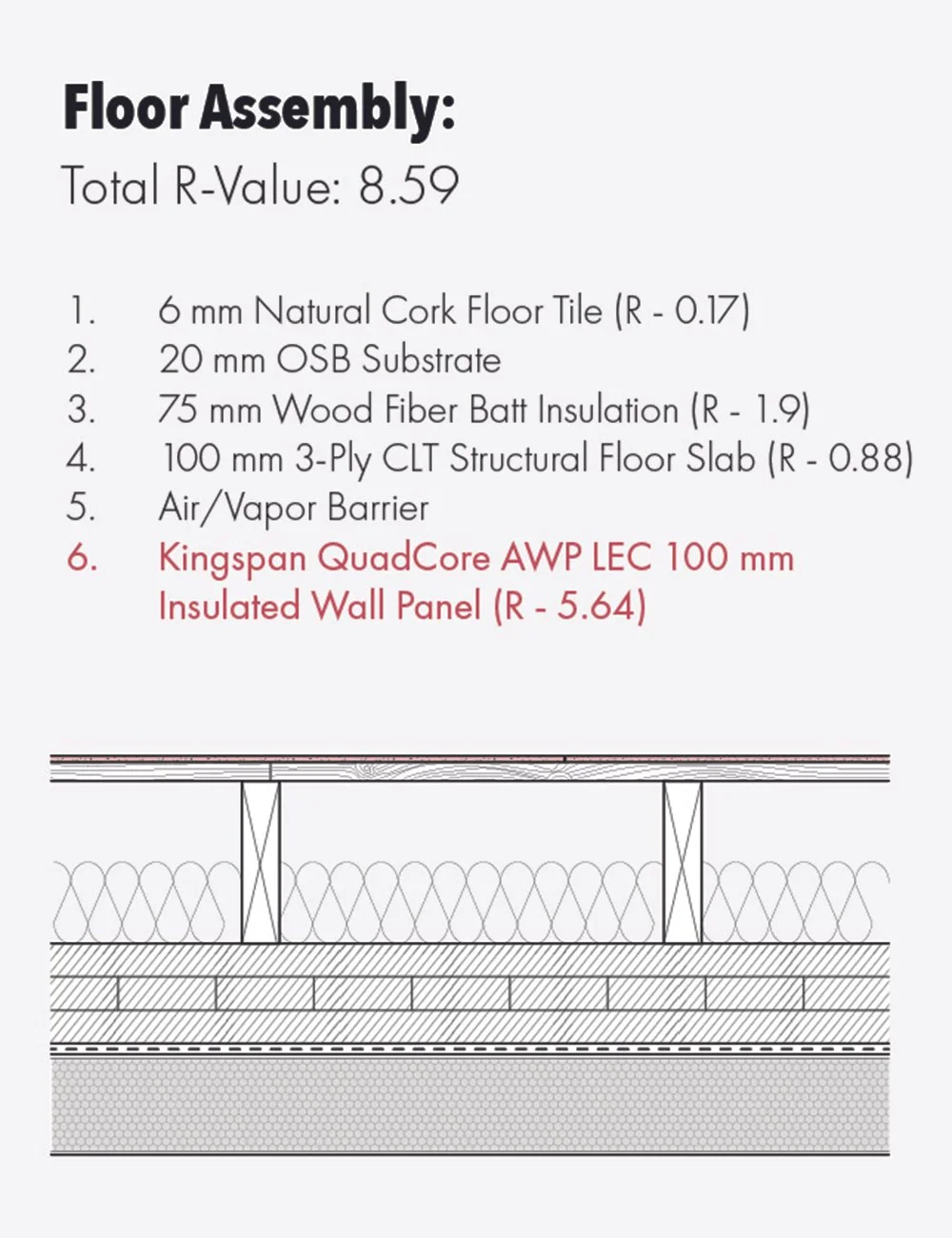
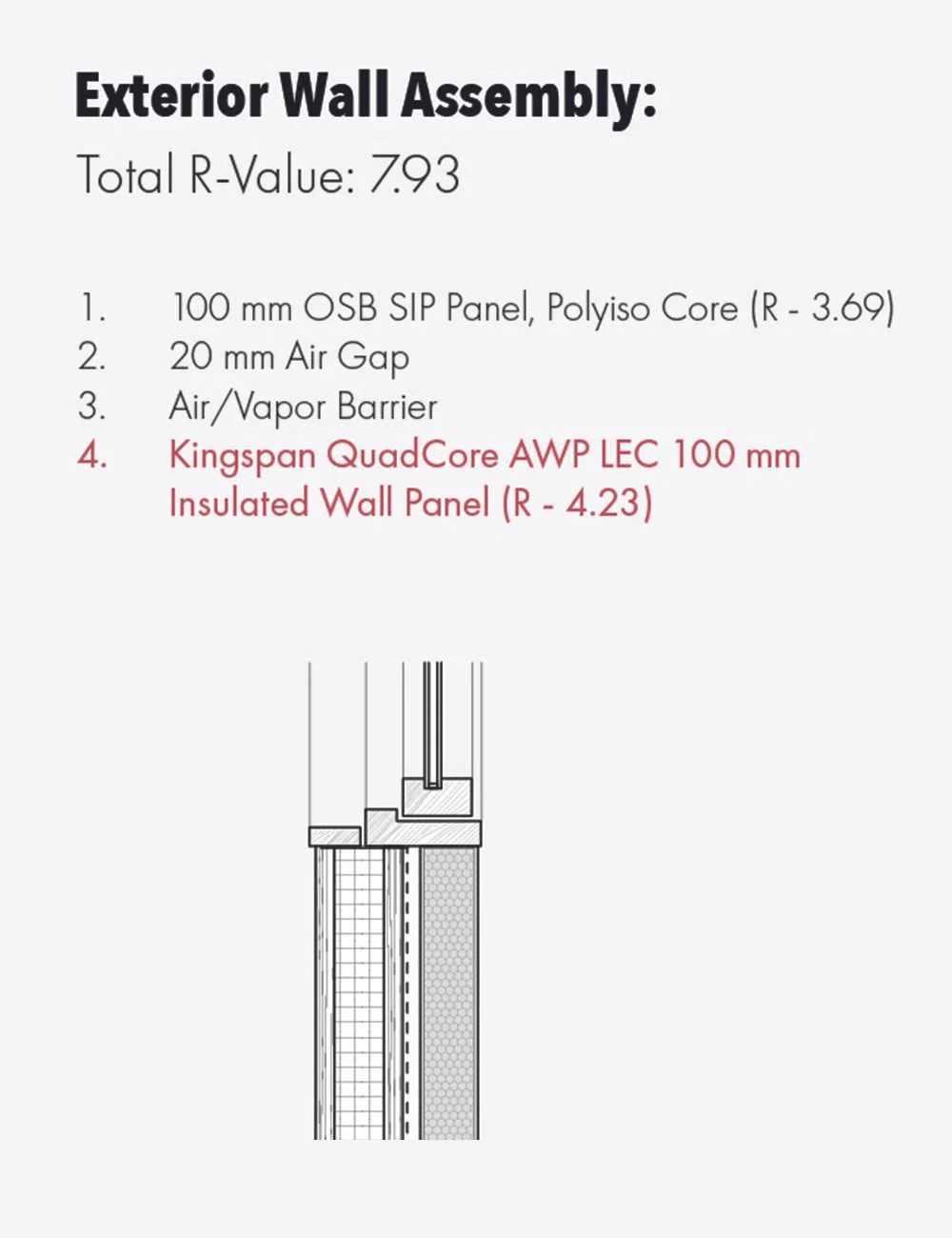
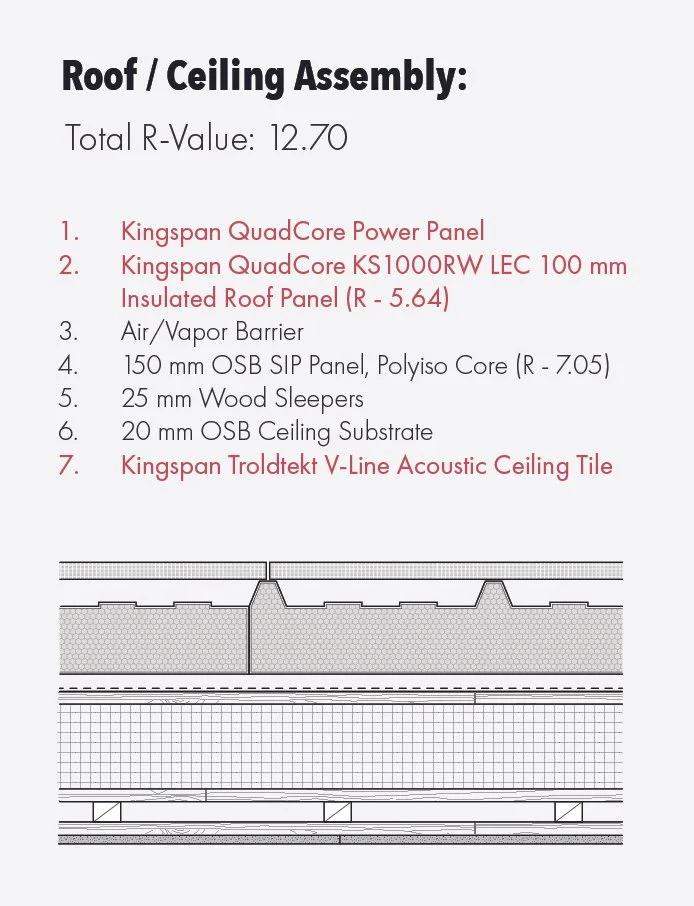
The building envelope maximizes thermal performance while minimizing wall, floor, and roof thickness. OSB-faced interior SIP panels and insulated metal façade panels create a continuous thermal barrier, while the outboard superstructure is connected to interior elements via thermal breaks. Assembly R-values, noted here in metric units, are designed to meet or exceed Passivehaus standards.
ISOMETRIC DIAGRAM OF MASS TIMBER TRUSS STRUCTURE
VIEW OVER EVAPORATIVE TRANSPIRATION BED FROM ROOFTOP PATIO
PASSIVE STRATEGIES:
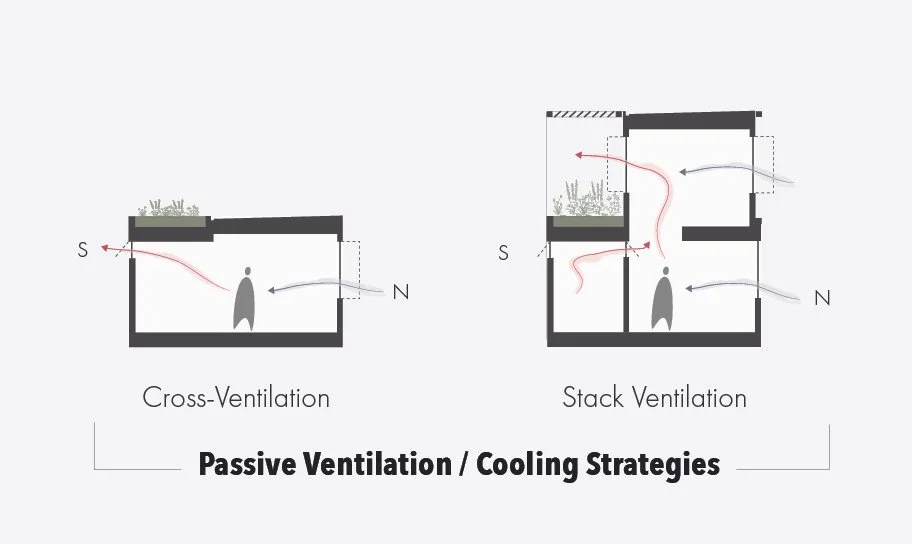
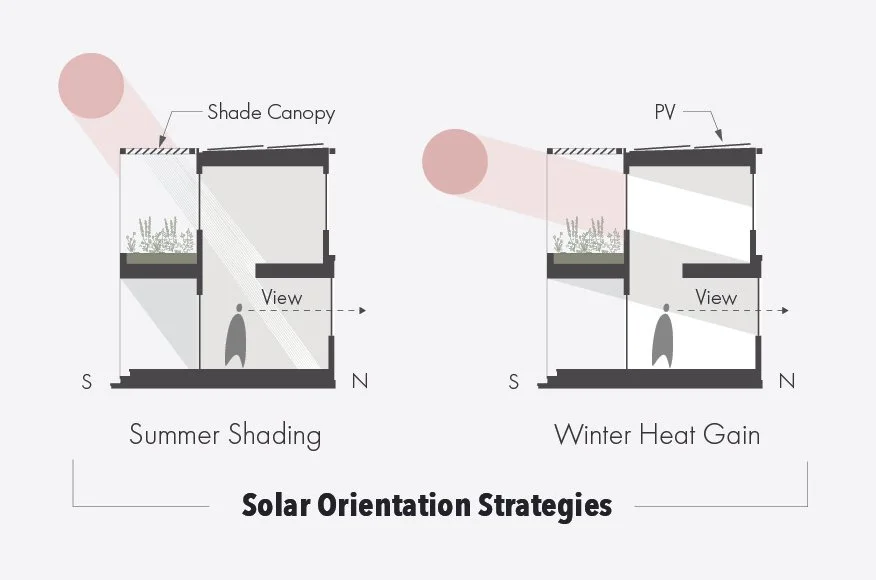
While designed for adaptability across a wide range of urban and rural contexts, the dwelling unit is optimally sited for passive heating and cooling with its entry doors and front porch facing the direction of midday sun. In this orientation, the deep porch and upper pergola canopy protect the glazing from solar heat gain in the summer, while low-angle winter sun is encouraged deep into the interior for passive winter heating and optimal daylighting.
HVAC DESIGN:
For much of the year, thermal comfort can be achieved through passive solar orientation, shading, and controlled natural ventilation. For use in colder or more variable climates, however, a high-efficiency mini-split heat pump is also discreetly integrated within the ceiling assembly to provide year-round temperature and humidity control. Supplemental winter heating is supplied by an underfloor electric hydronic loop, with its buffer tank thermally coupled to the primary domestic hot water system via a plate heat exchanger to optimize on-site energy recovery.
ELECTRICAL DESIGN:
The rooftop photovoltaic array is designed to produce more power than the home consumes, and a 13.5 Kwh solar battery allows the building to maintain functionality for up to 2 days without sun.
PLUMBING DESIGN:
Rooftop rainwater is collected, treated, and used for all potable water needs. Graywater is captured and stored for toilet use, while solid waste is treated by an aerobic digestion tank under the front porch deck to avoid impacting the surrounding site and limiting the scheme’s modular universality. The resulting effluent, stored in an adjacent underfloor tank, is then pumped to the rooftop evaporative transpiration bed, which also serves as a roof garden.